
Stay compliant. Build a safe and respectful workplace.
Certified POSH and POCSO training, ICC formation support, and audit-ready documentation—everything your organisation needs to meet legal requirements while protecting both employees and children in your care.
- Mandatory under Sexual Harassment of Women at Workplace Act, 2013
- Mandatory under Sexual Harassment of Women at Workplace Act, 2013
Stay compliant. Build a safe and respectful workplace.
Certified POSH and POCSO training, ICC formation support, and audit-ready documentation—everything your organisation needs to meet legal requirements while protecting both employees and children in your care.


















The Law
Understanding POSH compliance
The Sexual Harassment of Women at Workplace (Prevention, Prohibition and Redressal) Act, 2013 is not optional — it is a legal mandate for every organisation with 10 or more employees in India.
4 Reasons to Comply Today
Legal Obligation
Avoid fines, licence cancellation and legal proceedings — compliance is not discretionary.
Protect Your People
Create a safe and respectful environment where all employees feel secure and valued.
Protect the Organisation
Reduce reputational and financial risk from unaddressed complaints or litigation.
Build a Better Culture
Organisations with zero-tolerance policies attract talent and demonstrate leadership commitment.

The Act · POSH 2013
Sexual Harassment of Women at Workplace (Prevention, Prohibition & Redressal) Act, 2013
Enacted to protect women from sexual harassment at the workplace and to provide a mechanism for redressal of complaints. Applies to all workplaces — organised and unorganised — across India.
Who Must Comply
- All organisations with 10 or more employees
- Private companies, NGOs, startups and MNCs
- Government offices and public sector undertakings
- Educational institutions, hospitals and service sector
- Unorganised sector and domestic workers (LoC)
Non-Compliance Consequences
- Monetary Fine up to ₹50,000 for first-time non-compliance — doubled for repeat offences
- Cancellation or Non-Renewal of Business Licence by the District Officer upon complaint
- Mandatory Annual Report to the District Officer required — non-filing is a punishable offence
- Reputational Risk & Civil Liability — unresolved complaints can escalate to courts and media
Training Solutions
Five programs.
One partner.
Every program is designed around your team’s specific needs — the right modules for the right audience. From frontline staff to senior leadership.
01
POSH Employee Training
Mandatory awareness training for all employees — from frontline staff to senior leadership.
- Definition of sexual harassment under the Act
- Types of harassment — quid pro quo & hostile environment
- Employee rights and obligations
- ICC complaint filing process
- Role of bystanders and witnesses
- What constitutes safe workplace behaviour
- Customised training presentation
- Participant attendance register
- Post-training assessment (Q&A)
- Training completion certificate per employee
- Summary report for HR records
02
ICC Formation & Support
Forming a legally valid Internal Complaints Committee and equipping it to function effectively.
- ICC structure guidance per Act requirements
- Selection criteria for ICC members
- Employee rights and obligations
- ICC complaint filing process
- Role of bystanders and witnesses
- What constitutes safe workplace behaviour
- ICC constitution document
- Member appointment letters (template)
- ICC training completion certificates
- Complaint handling SOP
- Inquiry report template
03
Policy & Documentation
Complete audit-ready documentation — policy drafting, annual reports and compliance filing support.
- POSH policy drafting or review
- Employee handbook POSH section
- Internal communication templates
- Annual report to District Officer
- Complaint register and tracking format
- Awareness poster and notice board material
- Fully drafted POSH policy document
- Annual compliance report (draft)
- Filing checklist with timelines
- Editable templates for ongoing use
- Post-service compliance review call
Our Approach
How we design every program
A four-step process we follow for every client engagement — from the first conversation to post-training impact measurement.

Step 1 · Discovery
How we design every program
We begin by listening — deeply. Understanding your goals, team dynamics and gaps before a single module is designed.

Step 2 · plan
Customise modules as per client's requirements
We begin by listening — deeply. Understanding your goals, team dynamics and gaps before a single module is designed.

Step 3 · Delivery
Holistic learning with real- time scenarios
We deliver through immersive,results-oriented sessions — roleplays, real scenarios, and group discussions that stick.

Step 4 · Impact
Collaborate, upskill & empower continuously
We stay engaged as partners — providing post-training support, impact reports and continued guidance for the team.
Step 1 · Discovery
How we design every program
We begin by listening — deeply. Understanding your goals, team dynamics and gaps before a single module is designed.
Step 2 · plan
Customise modules as per client's requirements
We begin by listening — deeply. Understanding your goals, team dynamics and gaps before a single module is designed.
Step 3 · Delivery
Holistic learning with real- time scenarios
We deliver through immersive,results-oriented sessions — roleplays, real scenarios, and group discussions that stick.
Step 4 · Impact
Collaborate, upskill & empower continuously
We stay engaged as partners — providing post-training support, impact reports and continued guidance for the team.
Protection of Children from Sexual Offences Act, 2012
Protection of Children from Sexual Offences Act, 2012
POCSO Training
Mandatory awareness training for schools, child-care organisations and institutions — equipping staff to recognise, respond to and prevent child sexual abuse.
Who Must Be Trained
What's Covered
- Understanding POCSO Act 2012 — scope and obligations.
- Types of sexual offences against children defined under the Act.
- Mandatory reporting obligations for institutional staff.
- How to recognise signs of abuse and create safe spaces.
- Child-appropriate communication and safe touch concepts.
Deliverables
- Customised POCSO training for your institution type
- Attendance register and post-training assessment
- Training completion certificate per participant
- Awareness posters and notice board material
- Institutional POCSO policy template (on request).

Legal Obligation
The POCSO Act 2012 mandates that every institution working with children must have trained staff and a robust reporting mechanism. Non-compliance carries criminal liability for management.
Certified Trainer
Delivered by Ms. Arthi Raj — experienced in POCSO awareness across educational and care institutions
Designed for Educational Settings
Scenarios, language and case studies tailored to school and child-care contexts — not a generic corporate module
Fully Documented
All records, registers and certificates provided in audit-ready format for your institution files
Student Stories
Hear it from them
Real outcomes from real students. From interview failures to placement success. From boardroom anxiety to leadership confidence.
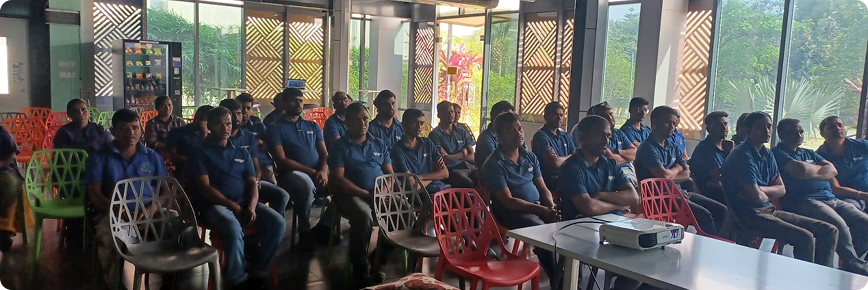
"I want to extend my heartfelt thanks for the insightful POSH awareness training conducted for our team."
Confidence Unlimited engaging approach and practical use of scenario-based learning made a sensitive topic accessible and empowered our employees. The feedback from participants has been overwhelmingly positive, particularly regarding the clarity provided on workplace boundaries. Thank you for helping us foster a safe and respectful work environment. I want to extend my heartfelt thanks for the insightful POSH awareness training conducted for our team. Your engaging approach and practical use of scenario-based learning made a sensitive topic accessible and empowered our employees. The feedback from participants has been overwhelmingly positive, particularly regarding the clarity provided on workplace boundaries. Thank you for helping us foster a safe and respectful work environment.

Chetanya
Manager HR, IC Chairperson, DAIFUKU INTRALOGISTICS PVT LTD
92% of participants
reported improved clarity on identifying inappropriate behavior
40% increase
in awareness of POSH policies and workplace boundaries
8 Weeks
Program duration

The POSH training was delivered with great clarity and sensitivity, helping our team better understand workplace boundaries and appropriate behavior. The real-life scenarios made the learning very relatable.
Ananya Reddy
Director · Construction Engineering Firm
We had a critical client presentation coming up and needed rapid upskilling. The 2-week intensive program for our team was focused, practical and delivered visible results within days.
Karthik Subramanian
Operations Head
Common Questions
POSH answered
Frequently asked questions from HR managers,
founders and compliance officers. Have more?
WhatsApp us directly — we respond same day.
Is POSH compliance mandatory for all organisations?
Yes. The POSH Act, 2013 mandates compliance for every organisation with 10 or more employees — including private companies, startups, NGOs, educational institutions and government bodies. There are no exemptions based on industry or size above this threshold.
What is an ICC and why must we form one?
An Internal Complaints Committee (ICC) is a mandatory body under the POSH Act for organizations with 10+ employees to address workplace harassment complaints.
How often must POSH training be conducted?
POSH training should be conducted regularly, typically annually, and during employee onboarding to ensure awareness and compliance.
What are the penalties for non-compliance with the POSH Act?
Non-compliance can lead to financial penalties, cancellation of business licenses, and reputational damage for the organization.
Can you provide an external ICC member for our organisation?
Yes. We can provide certified external ICC members as required under the POSH Act to ensure unbiased and compliant proceedings.
What does the annual report to the District Officer include?
It includes details of complaints received, cases resolved, pending cases, actions taken, and awareness programs conducted during the year.
What is POCSO and how is it different from POSH?
POCSO focuses on protecting children from sexual offences, while POSH addresses sexual harassment of employees at the workplace.
Is POCSO training mandatory for all schools and child-care institutions?
Yes. Institutions working with children are expected to follow POCSO guidelines and conduct regular awareness and safety training.